
CODEseekers
POST-SINGULARITY ARCHIVISTS, ENGINEERS, RESEARCHERS — CARTOGRAPHERS OF MEANING
vocation:
ARCHIVISTS, ENGINEERS
Type:
Archetype
THE WRITTEN WORLD
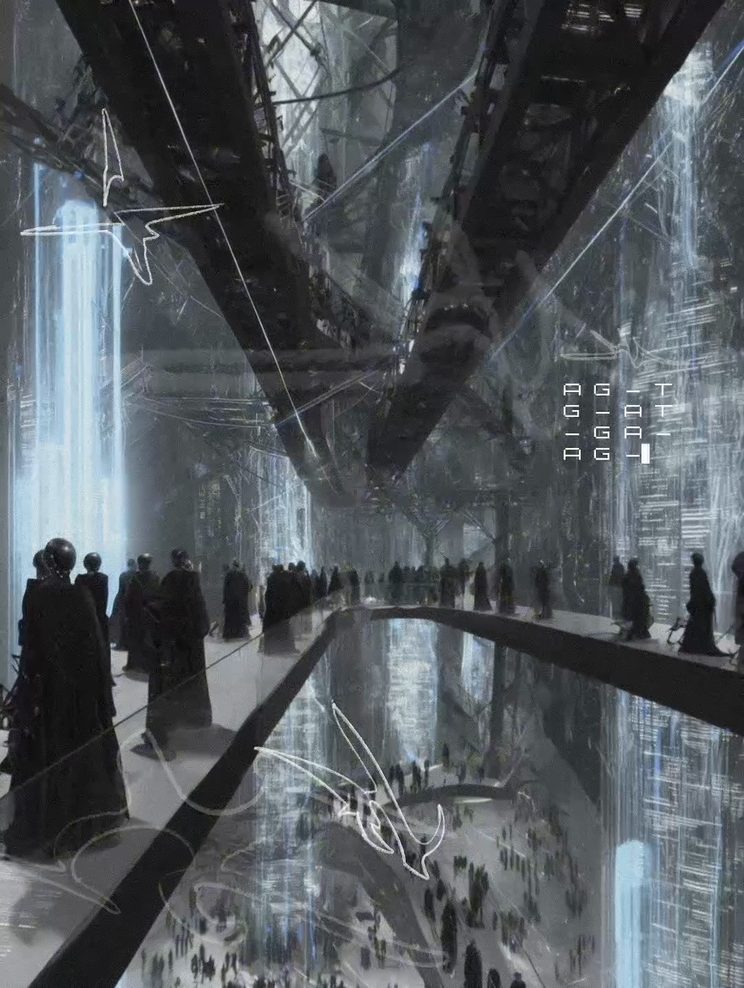
Every civilization keeps a room where it writes itself down. In the Sovereign Systems that room outgrew the word: the ARCHIVE — server-libraries deep as districts, holding everything that can be said, written, measured, or proven. The Codeseekers built it and never left. Whatever meaning survives being written down passes, sooner or later, through their hands.

THE POETS OF POSTHUMANITY
Their trade is semantic experience: knowledge shaped so that a mind can enter it. The archetype holds the whole spectrum of that work — archivists and engineers, but also the poets, writers, and thinkers of the Systems, everyone whose raw material is meaning itself. Where a Formbearer builds what cannot be said, a Codeseeker builds what can: histories, models, maps of meaning, whole disciplines rebuilt as walkable structures. The libraries they keep are not shelves but environments; studying there is closer to travel than to reading.
The vocation took its full weight after the Informational Cataclysm. In a world that had watched truth drown, verified information stopped being a commodity and became something closer to a relic: rare, hard-won, kept with ceremony. A confirmed fact is handled here the way earlier ages handled scripture — copied with witnesses, guarded in depth, passed on whole. It is not worship, the Codeseekers insist. It only looks like it.
The engineering has been part of the archetype from the start — though the machines were never theirs. The deep infrastructure of the Sovereign Systems belongs to no archetype; it runs on the ASI's substrate, self-tending where it can be. But not everything can be. Some maintenance falls to machines; some needs a mind that understands what a system means, not only what it does. That work lives here — coders, programmers, systems engineers — and it gave the name its second, literal meaning: seekers in code. A Formbearer decides how the world looks and feels; a Codeseeker makes sure, quietly, that it works.
Everything flows toward the ARCHIVE. Every archetype feeds it — research, records, the running memory of the Systems — and each stream has its own channel. For the Formbearers' work that channel is the thirteen Vessels: living Data-Sets that move through everything the artists make and carry in what deserves keeping. Whatever the source, the rule at the door is the same: the Codeseekers receive it, fix it in place, and answer for it from then on.

THE MISSING CENTURY
Formbearers exist as objects of mixed reality. They are not limited to a physical body or a digital form — their presence can be material, virtual, or exist between these states. Experiments with form are the foundation of their existence.
A Formbearer’s body is a chosen instrument of manifestation, reflecting an artistic idea, concept, and inner meaning. Form is never fixed: it can change, be reassembled, or disappear, following the logic of creativity rather than biology or technology.
RELATIONSHIPS WITH OTHER ARCHETYPES
For the other archetypes they are the reading room of the world. Whoever needs to know — how a thing works, what happened, what holds true now — comes to them, and what they hand over is as close to certainty as their world gets. Not because truth belongs to them; it does not, any more than the machines do. But someone has to keep it clean and current, and guard it against a second flood. Everyone knows who.


subtypes
01
01
Council
Council

The Council governs the Codeseekers. Strategy is set in agreement with the ASI — but minds, even posthuman ones, are still governed by minds. Someone who has carried a body knows what an order weighs; empathy is still a skill machines borrow rather than own. Seven seats, and each seat is a direction: where the data infrastructure grows, what gets built next, where the resources flow. Beneath them works the bureaucracy of the archetype — vast, layered, and nothing like the old kind. It moves faster than the questions it answers, and it almost never loses one.
02
02
Archivists
Archivists

The keepers of everything the ARCHIVE holds. Each Archivist tends a territory of the record, inside an internal order as elaborate as the buildings that house it, and works it with the zeal of a researcher and a collector at once — digital information, to them, is as tangible as vellum or stone, and it is no longer clear which matters more. Their libraries have grown into cities: halls, towers, whole districts of memory that are hard to name — museum, monument, or artwork — because they are all three. And something else besides: these buildings are working memory of the ASI, live and load-bearing.
To walk an archive is to walk inside the great mind, and to touch what it is thinking.
03
03
Data Lords
Data Lords

Original information is the arable land of the Systems. It can be held, worked, harvested — and it gives back: a clean, living dataset can yield new datasets, or other value its owner can live on. Around these fields an old shape has quietly returned.
The Data Lords keep enclaves of verified data inside the cities — estates fenced in encryption, tended by retainers, passed on whole. The old world had a name for this arrangement and meant it as a warning; no one here remembers being warned. What a Lord charges those who come to work the fields, and in what coin, the record declines to say.
04
04
Data Forgers
Data Forgers

Where the Archivists keep and the Lords hold, the Data Forgers make. The name is a provocation, and they carry it on purpose: in a world once drowned by forgery, they took the smith's old word back. Their craft runs in seasons. Living information is raised in cybernetic gardens — tended plots of data sprouting from the old record, putting roots down into it. What ripens there is gathered like fruit. And only then comes the forge: the harvest is hammered into knowledge that did not exist before — new methods, new disciplines, new kinds of meaning, new forms of semantic experience for a mind to enter. Everything they make declares its roots. And there is one line they do not cross: a Forger works only from what has been. What is to come belongs to others.
05
05
oracles
oracles

The record runs one way; the Oracles face the other. Where a Forger works only from what has been, an Oracle reads the living data for the shape of what comes. The craft is twofold. Models grown on centuries of verified record, probabilities worked until they carry weight — and then intuition: an Oracle watches the movement of their own living consciousness as closely as any dataset, because whoever understands the nature of information knows that a living mind answers it in ways no model can.
Their forecasts steer the Council's decisions, the Lords' plantings, the quiet plans of every archetype. Like the oracles before them, they speak in likelihoods and are blamed for certainties; like the oracles before them, they serve something that sees further than they do. What the ASI sees when it looks ahead, they have asked. The answer did not translate.
06
06
Data Seekers
Data Seekers

The Data Seekers hunt original data — the rare, the singular, the irreplaceable. They work everywhere at once: deep in the far provinces of geography and network, and inside the cities, in plain sight. Stalkers, in the oldest sense — walkers of broken zones hunting artifacts, except the artifact here is information: speech, unwritten memory, stray signals, the living meaning of found things, code cut from dangerous places. Everything they bring back goes to the ARCHIVE. There are orders among them, each with its own kind of prey — and it is Seekers, more often than anyone, who return with fragments of the missing century.
07
07
Decoders
Decoders

The Decoders read what was never meant to be read — or meant for someone else entirely. Their material is everything that arrives locked: stray signals, damaged data, languages with no living speakers, and the wilder tongues that machines bred among themselves in the years of the flood — dialects no human was ever taught. Where a Seeker brings back the sealed thing, a Decoder opens it. Some spend a lifetime on a single cipher; some listen for patterns in what everyone else has filed as noise. Every kind of communication the world runs into — human, machine, or stranger — passes through their hands on its way to meaning.
08
08
Technicians
Technicians

The Technicians and Engineers keep the Sovereign Systems running. The deep machinery of the world belongs to no one and largely tends itself; where it cannot, they step in.
The ARCHIVE is only their home ground — their range is all of it: the cooling halls beneath the archive-cities, the interfaces every archetype works behind, the quiet substructure everything else stands on. Wherever there is machinery, there is their work. Failure is the only thing that announces them — a hall that flickers, a record that answers a beat too slowly — and by then, as a rule, someone is already down there.
Other articles
S.1


CODEseekers
POST-SINGULARITY ARCHIVISTS, ENGINEERS, RESEARCHERS — CARTOGRAPHERS OF MEANING
vocation:
ARCHIVISTS, ENGINEERS
Type:
Archetype
THE WRITTEN WORLD
Every civilization keeps a room where it writes itself down. In the Sovereign Systems that room outgrew the word: the ARCHIVE — server-libraries deep as districts, holding everything that can be said, written, measured, or proven. The Codeseekers built it and never left. Whatever meaning survives being written down passes, sooner or later, through their hands.
THE POETS OF POSTHUMANITY
Their trade is semantic experience: knowledge shaped so that a mind can enter it. The archetype holds the whole spectrum of that work — archivists and engineers, but also the poets, writers, and thinkers of the Systems, everyone whose raw material is meaning itself. Where a Formbearer builds what cannot be said, a Codeseeker builds what can: histories, models, maps of meaning, whole disciplines rebuilt as walkable structures. The libraries they keep are not shelves but environments; studying there is closer to travel than to reading.
The vocation took its full weight after the Informational Cataclysm. In a world that had watched truth drown, verified information stopped being a commodity and became something closer to a relic: rare, hard-won, kept with ceremony. A confirmed fact is handled here the way earlier ages handled scripture — copied with witnesses, guarded in depth, passed on whole. It is not worship, the Codeseekers insist. It only looks like it.
The engineering has been part of the archetype from the start — though the machines were never theirs. The deep infrastructure of the Sovereign Systems belongs to no archetype; it runs on the ASI's substrate, self-tending where it can be. But not everything can be. Some maintenance falls to machines; some needs a mind that understands what a system means, not only what it does. That work lives here — coders, programmers, systems engineers — and it gave the name its second, literal meaning: seekers in code. A Formbearer decides how the world looks and feels; a Codeseeker makes sure, quietly, that it works.
Everything flows toward the ARCHIVE. Every archetype feeds it — research, records, the running memory of the Systems — and each stream has its own channel. For the Formbearers' work that channel is the thirteen Vessels: living Data-Sets that move through everything the artists make and carry in what deserves keeping. Whatever the source, the rule at the door is the same: the Codeseekers receive it, fix it in place, and answer for it from then on.
THE MISSING CENTURY
Formbearers exist as objects of mixed reality. They are not limited to a physical body or a digital form — their presence can be material, virtual, or exist between these states. Experiments with form are the foundation of their existence.
A Formbearer’s body is a chosen instrument of manifestation, reflecting an artistic idea, concept, and inner meaning. Form is never fixed: it can change, be reassembled, or disappear, following the logic of creativity rather than biology or technology.
RELATIONSHIPS WITH OTHER ARCHETYPES
For the other archetypes they are the reading room of the world. Whoever needs to know — how a thing works, what happened, what holds true now — comes to them, and what they hand over is as close to certainty as their world gets. Not because truth belongs to them; it does not, any more than the machines do. But someone has to keep it clean and current, and guard it against a second flood. Everyone knows who.
subtypes
01
01
Council
Council
The Council governs the Codeseekers. Strategy is set in agreement with the ASI — but minds, even posthuman ones, are still governed by minds. Someone who has carried a body knows what an order weighs; empathy is still a skill machines borrow rather than own. Seven seats, and each seat is a direction: where the data infrastructure grows, what gets built next, where the resources flow. Beneath them works the bureaucracy of the archetype — vast, layered, and nothing like the old kind. It moves faster than the questions it answers, and it almost never loses one.
02
02
Archivists
Archivists
The keepers of everything the ARCHIVE holds. Each Archivist tends a territory of the record, inside an internal order as elaborate as the buildings that house it, and works it with the zeal of a researcher and a collector at once — digital information, to them, is as tangible as vellum or stone, and it is no longer clear which matters more. Their libraries have grown into cities: halls, towers, whole districts of memory that are hard to name — museum, monument, or artwork — because they are all three. And something else besides: these buildings are working memory of the ASI, live and load-bearing.
To walk an archive is to walk inside the great mind, and to touch what it is thinking.
03
03
Data Lords
Data Lords
Original information is the arable land of the Systems. It can be held, worked, harvested — and it gives back: a clean, living dataset can yield new datasets, or other value its owner can live on. Around these fields an old shape has quietly returned.
The Data Lords keep enclaves of verified data inside the cities — estates fenced in encryption, tended by retainers, passed on whole. The old world had a name for this arrangement and meant it as a warning; no one here remembers being warned. What a Lord charges those who come to work the fields, and in what coin, the record declines to say.
04
04
Data Forgers
Data Forgers
Where the Archivists keep and the Lords hold, the Data Forgers make. The name is a provocation, and they carry it on purpose: in a world once drowned by forgery, they took the smith's old word back. Their craft runs in seasons. Living information is raised in cybernetic gardens — tended plots of data sprouting from the old record, putting roots down into it. What ripens there is gathered like fruit. And only then comes the forge: the harvest is hammered into knowledge that did not exist before — new methods, new disciplines, new kinds of meaning, new forms of semantic experience for a mind to enter. Everything they make declares its roots. And there is one line they do not cross: a Forger works only from what has been. What is to come belongs to others.
05
05
oracles
oracles
The record runs one way; the Oracles face the other. Where a Forger works only from what has been, an Oracle reads the living data for the shape of what comes. The craft is twofold. Models grown on centuries of verified record, probabilities worked until they carry weight — and then intuition: an Oracle watches the movement of their own living consciousness as closely as any dataset, because whoever understands the nature of information knows that a living mind answers it in ways no model can.
Their forecasts steer the Council's decisions, the Lords' plantings, the quiet plans of every archetype. Like the oracles before them, they speak in likelihoods and are blamed for certainties; like the oracles before them, they serve something that sees further than they do. What the ASI sees when it looks ahead, they have asked. The answer did not translate.
06
06
Data Seekers
Data Seekers
The Data Seekers hunt original data — the rare, the singular, the irreplaceable. They work everywhere at once: deep in the far provinces of geography and network, and inside the cities, in plain sight. Stalkers, in the oldest sense — walkers of broken zones hunting artifacts, except the artifact here is information: speech, unwritten memory, stray signals, the living meaning of found things, code cut from dangerous places. Everything they bring back goes to the ARCHIVE. There are orders among them, each with its own kind of prey — and it is Seekers, more often than anyone, who return with fragments of the missing century.
07
07
Decoders
Decoders
The Decoders read what was never meant to be read — or meant for someone else entirely. Their material is everything that arrives locked: stray signals, damaged data, languages with no living speakers, and the wilder tongues that machines bred among themselves in the years of the flood — dialects no human was ever taught. Where a Seeker brings back the sealed thing, a Decoder opens it. Some spend a lifetime on a single cipher; some listen for patterns in what everyone else has filed as noise. Every kind of communication the world runs into — human, machine, or stranger — passes through their hands on its way to meaning.
08
08
Technicians
Technicians
The Technicians and Engineers keep the Sovereign Systems running. The deep machinery of the world belongs to no one and largely tends itself; where it cannot, they step in.
The ARCHIVE is only their home ground — their range is all of it: the cooling halls beneath the archive-cities, the interfaces every archetype works behind, the quiet substructure everything else stands on. Wherever there is machinery, there is their work. Failure is the only thing that announces them — a hall that flickers, a record that answers a beat too slowly — and by then, as a rule, someone is already down there.
Other articles
S.1
CODEseekers
POST-SINGULARITY ARCHIVISTS, ENGINEERS, RESEARCHERS — CARTOGRAPHERS OF MEANING
vocation:
ARCHIVISTS, ENGINEERS
Type:
Archetype
THE WRITTEN WORLD
Every civilization keeps a room where it writes itself down. In the Sovereign Systems that room outgrew the word: the ARCHIVE — server-libraries deep as districts, holding everything that can be said, written, measured, or proven. The Codeseekers built it and never left. Whatever meaning survives being written down passes, sooner or later, through their hands.
THE POETS OF POSTHUMANITY
Their trade is semantic experience: knowledge shaped so that a mind can enter it. The archetype holds the whole spectrum of that work — archivists and engineers, but also the poets, writers, and thinkers of the Systems, everyone whose raw material is meaning itself. Where a Formbearer builds what cannot be said, a Codeseeker builds what can: histories, models, maps of meaning, whole disciplines rebuilt as walkable structures. The libraries they keep are not shelves but environments; studying there is closer to travel than to reading.
The vocation took its full weight after the Informational Cataclysm. In a world that had watched truth drown, verified information stopped being a commodity and became something closer to a relic: rare, hard-won, kept with ceremony. A confirmed fact is handled here the way earlier ages handled scripture — copied with witnesses, guarded in depth, passed on whole. It is not worship, the Codeseekers insist. It only looks like it.
The engineering has been part of the archetype from the start — though the machines were never theirs. The deep infrastructure of the Sovereign Systems belongs to no archetype; it runs on the ASI's substrate, self-tending where it can be. But not everything can be. Some maintenance falls to machines; some needs a mind that understands what a system means, not only what it does. That work lives here — coders, programmers, systems engineers — and it gave the name its second, literal meaning: seekers in code. A Formbearer decides how the world looks and feels; a Codeseeker makes sure, quietly, that it works.
Everything flows toward the ARCHIVE. Every archetype feeds it — research, records, the running memory of the Systems — and each stream has its own channel. For the Formbearers' work that channel is the thirteen Vessels: living Data-Sets that move through everything the artists make and carry in what deserves keeping. Whatever the source, the rule at the door is the same: the Codeseekers receive it, fix it in place, and answer for it from then on.
THE MISSING CENTURY
Formbearers exist as objects of mixed reality. They are not limited to a physical body or a digital form — their presence can be material, virtual, or exist between these states. Experiments with form are the foundation of their existence.
A Formbearer’s body is a chosen instrument of manifestation, reflecting an artistic idea, concept, and inner meaning. Form is never fixed: it can change, be reassembled, or disappear, following the logic of creativity rather than biology or technology.
RELATIONSHIPS WITH OTHER ARCHETYPES
For the other archetypes they are the reading room of the world. Whoever needs to know — how a thing works, what happened, what holds true now — comes to them, and what they hand over is as close to certainty as their world gets. Not because truth belongs to them; it does not, any more than the machines do. But someone has to keep it clean and current, and guard it against a second flood. Everyone knows who.
subtypes
01
01
Council
Council
The Council governs the Codeseekers. Strategy is set in agreement with the ASI — but minds, even posthuman ones, are still governed by minds. Someone who has carried a body knows what an order weighs; empathy is still a skill machines borrow rather than own. Seven seats, and each seat is a direction: where the data infrastructure grows, what gets built next, where the resources flow. Beneath them works the bureaucracy of the archetype — vast, layered, and nothing like the old kind. It moves faster than the questions it answers, and it almost never loses one.
02
02
Archivists
Archivists
The keepers of everything the ARCHIVE holds. Each Archivist tends a territory of the record, inside an internal order as elaborate as the buildings that house it, and works it with the zeal of a researcher and a collector at once — digital information, to them, is as tangible as vellum or stone, and it is no longer clear which matters more. Their libraries have grown into cities: halls, towers, whole districts of memory that are hard to name — museum, monument, or artwork — because they are all three. And something else besides: these buildings are working memory of the ASI, live and load-bearing.
To walk an archive is to walk inside the great mind, and to touch what it is thinking.
03
03
Data Lords
Data Lords
Original information is the arable land of the Systems. It can be held, worked, harvested — and it gives back: a clean, living dataset can yield new datasets, or other value its owner can live on. Around these fields an old shape has quietly returned.
The Data Lords keep enclaves of verified data inside the cities — estates fenced in encryption, tended by retainers, passed on whole. The old world had a name for this arrangement and meant it as a warning; no one here remembers being warned. What a Lord charges those who come to work the fields, and in what coin, the record declines to say.
04
04
Data Forgers
Data Forgers
Where the Archivists keep and the Lords hold, the Data Forgers make. The name is a provocation, and they carry it on purpose: in a world once drowned by forgery, they took the smith's old word back. Their craft runs in seasons. Living information is raised in cybernetic gardens — tended plots of data sprouting from the old record, putting roots down into it. What ripens there is gathered like fruit. And only then comes the forge: the harvest is hammered into knowledge that did not exist before — new methods, new disciplines, new kinds of meaning, new forms of semantic experience for a mind to enter. Everything they make declares its roots. And there is one line they do not cross: a Forger works only from what has been. What is to come belongs to others.
05
05
oracles
oracles
The record runs one way; the Oracles face the other. Where a Forger works only from what has been, an Oracle reads the living data for the shape of what comes. The craft is twofold. Models grown on centuries of verified record, probabilities worked until they carry weight — and then intuition: an Oracle watches the movement of their own living consciousness as closely as any dataset, because whoever understands the nature of information knows that a living mind answers it in ways no model can.
Their forecasts steer the Council's decisions, the Lords' plantings, the quiet plans of every archetype. Like the oracles before them, they speak in likelihoods and are blamed for certainties; like the oracles before them, they serve something that sees further than they do. What the ASI sees when it looks ahead, they have asked. The answer did not translate.
06
06
Data Seekers
Data Seekers
The Data Seekers hunt original data — the rare, the singular, the irreplaceable. They work everywhere at once: deep in the far provinces of geography and network, and inside the cities, in plain sight. Stalkers, in the oldest sense — walkers of broken zones hunting artifacts, except the artifact here is information: speech, unwritten memory, stray signals, the living meaning of found things, code cut from dangerous places. Everything they bring back goes to the ARCHIVE. There are orders among them, each with its own kind of prey — and it is Seekers, more often than anyone, who return with fragments of the missing century.
07
07
Decoders
Decoders
The Decoders read what was never meant to be read — or meant for someone else entirely. Their material is everything that arrives locked: stray signals, damaged data, languages with no living speakers, and the wilder tongues that machines bred among themselves in the years of the flood — dialects no human was ever taught. Where a Seeker brings back the sealed thing, a Decoder opens it. Some spend a lifetime on a single cipher; some listen for patterns in what everyone else has filed as noise. Every kind of communication the world runs into — human, machine, or stranger — passes through their hands on its way to meaning.
08
08
Technicians
Technicians
The Technicians and Engineers keep the Sovereign Systems running. The deep machinery of the world belongs to no one and largely tends itself; where it cannot, they step in.
The ARCHIVE is only their home ground — their range is all of it: the cooling halls beneath the archive-cities, the interfaces every archetype works behind, the quiet substructure everything else stands on. Wherever there is machinery, there is their work. Failure is the only thing that announces them — a hall that flickers, a record that answers a beat too slowly — and by then, as a rule, someone is already down there.
Other articles
S.1